How Solar Technology Is Transforming Indian Agriculture
Indian agriculture is experiencing a structural revolution driven by sustainable technology. For generations, farmers across the country have faced persistent operational bottlenecks: unreliable grid electricity, volatile diesel prices, and irregular watering schedules that force growers to irrigate fields late at night. As water tables shift and fuel expenses climb, conventional fossil-fuel-powered machinery increasingly strains seasonal profit margins.
Solar technology has emerged as a reliable, cost-effective alternative for smallholders and commercial farm enterprises alike. By tapping into abundant year-round sunlight, modern agricultural setups are converting unpredictable operational expenses into self-sustaining, long-term assets. From high-output irrigation pumps to smart perimeter protection, solar technology is actively reshaping the rural agricultural landscape.
1. High-Output Solar Water Pumping Systems
Water management is the core of successful crop production. Traditional grid-tied pumps often receive electricity in unpredictable shifts, frequently during midnight hours. This forces farmers into difficult, unsafe nighttime field management while dealing with voltage fluctuations that risk burning out motor windings. On the other hand, diesel pumps demand ongoing capital outlay, regular maintenance, and constant fuel transport.
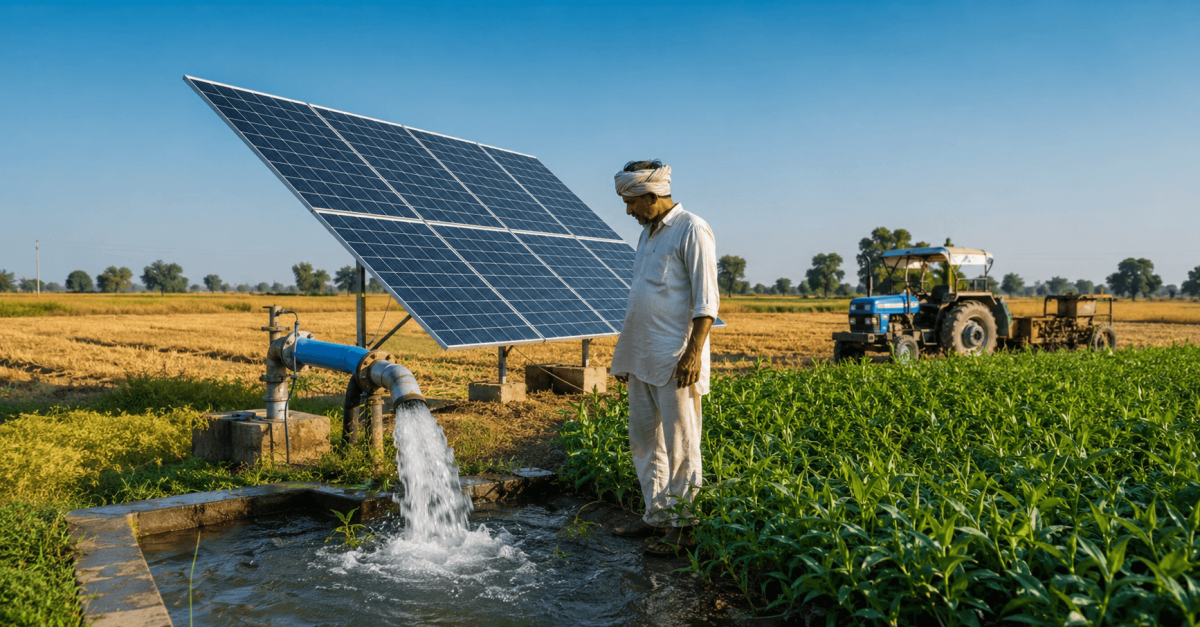
Modern solar photovoltaic (PV) water pumping solutions completely change this dynamic. Paired with variable frequency drives (VFD) and brushless DC (BLDC) motors, solar pumps deliver maximum water output during peak sunlight hours. This allows farmers to automate daytime irrigation, regulate soil moisture systematically, and protect their crops during critical flowering and grain-filling stages. You can explore a wide variety of irrigation and field implements directly in our agricultural machinery shop.
2. Solar-Powered Smart Fencing & Crop Defense
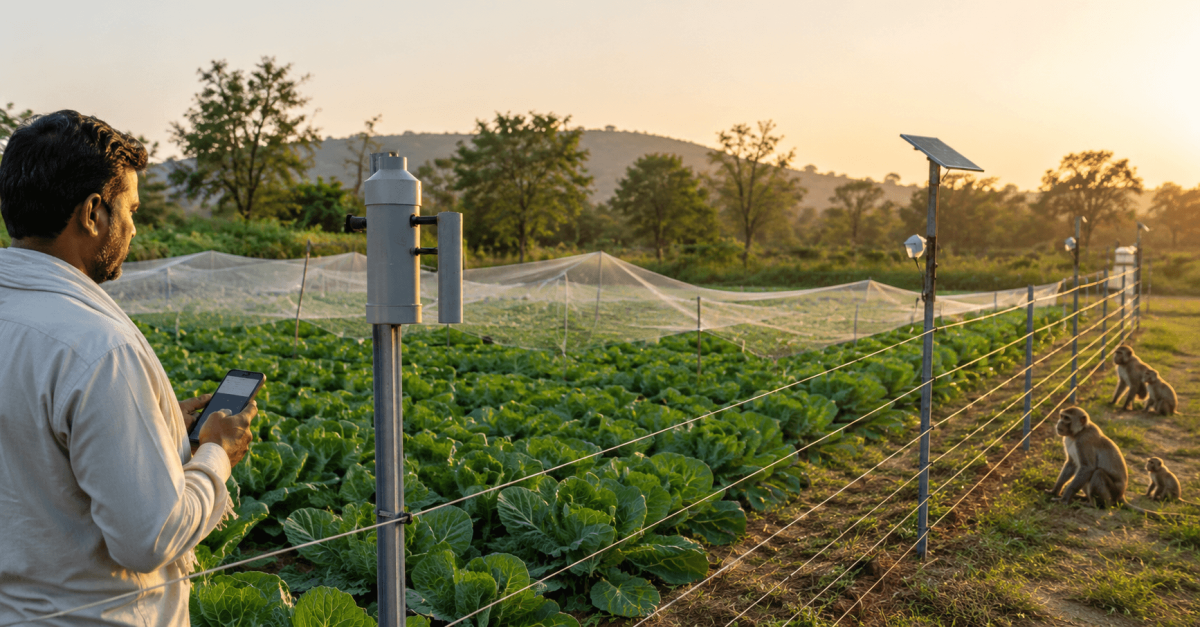
Crop destruction caused by wild boars, nilgai, stray cattle, and small pests is a leading cause of unexpected agricultural loss. Traditional barbed wire fences often fail to stop aggressive wildlife, while illegal direct connections to high-tension electrical wires present fatal hazards to humans and livestock.
Solar-powered electric fencing systems solve this challenge safely and legally. Powered by an intelligent energizer unit connected to a solar panel and deep-cycle battery backup, the system transmits brief, non-lethal, high-voltage electrical pulses along the fence perimeter every second. When an animal contacts the wire, it receives a momentary shock that deters future intrusion without causing physical injury. See practical setups and operational installations by browsing our on-field installation gallery.
3. Decentralized Solar Cold Storage Solutions
Post-harvest crop loss is a major challenge for Indian horticulture and vegetable growers. Highly perishable crops such as tomatoes, chillies, capsicum, onions, and leafy vegetables suffer rapid quality degradation immediately after harvest if left in ambient heat. Because centralized cold storage facilities are often located far from rural farms, farmers are frequently forced into immediate distress sales at unfavorable local market rates.
Decentralized, micro-cold storage rooms powered entirely by rooftop solar arrays provide a localized solution. Equipped with thermal energy storage or lithium battery banks, these units maintain optimal internal temperatures (4°C to 12°C) and humidity levels around the clock. By keeping produce fresh at the farm gate for days or weeks, farmers and Farmer Producer Organizations (FPOs) can bypass local gluts and sell their produce when market prices stabilize.
4. Advanced Solar Dryers for Value-Added Processing
Open-air sun drying on tarpaulins or bare ground has been the traditional method for processing spices, grains, and dried fruits. However, this exposes produce to airborne dust, insect contamination, sudden rainfall, and uneven moisture retention, which reduces final market value.
Enclosed solar greenhouse dryers and forced-convection solar drying cabinets solve these issues by accelerating moisture extraction in a protected, hygienic chamber. Regulated thermal airflow reduces drying times by over 50% while preserving essential vitamins, natural color, aroma, and commercial product grades for crops like turmeric, ginger, red chilli, and copra.
5. Precision Solar-Powered Spraying & Automation
Manual knapsack sprayers require strenuous physical pumping, which often results in uneven tank pressure, inconsistent droplet size, and operator exhaustion over large areas. This can lead to patchy pesticide application and chemical wastage.
Solar-rechargeable electric sprayers and automated spraying rigs provide steady operating pressure for consistent atomization. The resulting fine mist ensures uniform coverage across both upper and lower leaf surfaces, reducing overall pesticide consumption while improving pest control efficiency.
6. Agrisolar: Combining Crop Cultivation with Clean Energy
Agrivoltaics (or agrisolar) is an innovative farming method that co-locates agricultural production with solar power generation on the same piece of land. Elevating solar panels 8 to 10 feet above ground level allows tractors and farm equipment to cultivate crops beneath the shade of the solar arrays.
This dual-use approach offers clear microclimatic advantages: the partial shade created by the panels reduces soil evaporation and protects delicate crops from intense afternoon heat stress, while moisture transpired by the plants cools the underside of the solar panels, boosting overall photovoltaic electrical efficiency.
7. Economics, Return on Investment, and Subsidies
While initial capital setup was once a barrier for smallholders, favorable government initiatives such as the PM-KUSUM scheme, state subsidies, and accessible agricultural financing have made solar technology significantly more attainable.
Because solar panels typically feature long operational lifespans with minimal routine maintenance, most on-farm solar equipment pays for itself within 2 to 4 years through diesel and grid power savings. After this payback window, the system generates clean, virtually free operational power for decades.
Empower Your Farm with Basaveshwar Enterprises
Ready to make your agricultural operations self-reliant and cost-effective? Explore our field-tested agricultural equipment in our online shop, or connect with our support team directly through our Contact Page for customized recommendations, sizing, and pricing.