Solar Water Pumps vs Electric Water Pumps: Which Is Better?
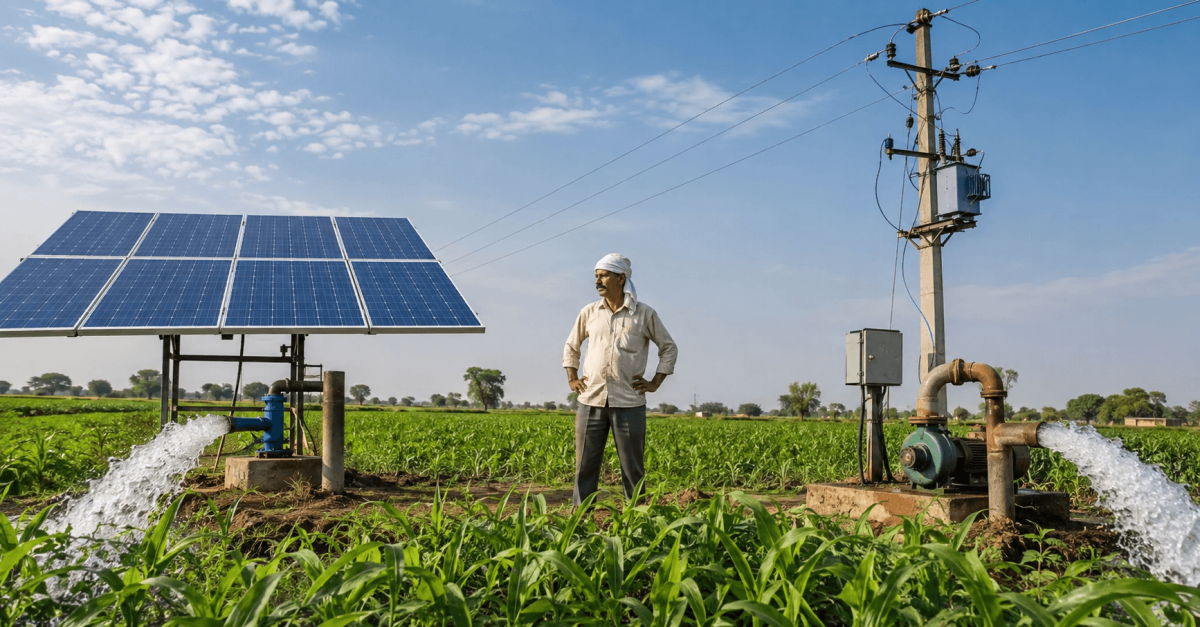
Irrigation reliability is the cornerstone of profitable agriculture. When deciding how to lift water from open wells, borewells, or farm ponds, farmers invariably face the classic comparison: Solar-Powered Water Pumps vs. Conventional Grid-Connected Electric Pumps. Both technologies offer unique operational profiles, upfront expenses, and daily running costs.
In this comprehensive comparison, we break down power reliability, operating expenses, setup capital, maintenance demands, and return on investment (ROI) to help you determine which pump setup best matches your agricultural needs.
| Feature | Solar Water Pump | Electric (Grid) Pump |
|---|---|---|
| Power Source | Direct Sunlight (DC/AC VFD) | State Electricity Grid (3-Phase/1-Phase) |
| Operating Cost | Zero Recurring Electricity Bills | Monthly Tariff / Grid Charges |
| Reliability | High during daytime (6–8 hours daily) | Subject to power cuts & midnight rosters |
| Initial Investment | Moderate to High (Subsidies available) | Low to Moderate (Line pull charges extra) |
1. Power Availability and Daily Irrigation Convenience
The primary issue with conventional electric water pumps in rural areas is irregular 3-phase power supply. In many agricultural belts, grid electricity is provided during night-time shifts or in broken 4-hour blocks. This forces farmers to travel to distant fields during dark, risky hours to operate starters, navigate voltage surges, and monitor water distribution.
Solar water pumps operate automatically as soon as the sun rises. The Variable Frequency Drive (VFD) tracks solar intensity throughout the morning and afternoon, providing smooth, predictable daytime pumping. This allows growers to systematically manage irrigation channels and drip lines during normal working hours without worrying about unscheduled blackouts.
2. Motor Burnout Risks & Voltage Fluctuations
Grid electricity in rural distribution sectors often experiences severe low-voltage dips, single-phasing faults, and sudden voltage spikes. These electrical irregularities frequently cause motor windings to overheat and burn out, forcing farmers to incur repetitive rewinding costs and long repair delays during peak watering periods.
Modern solar pumping setups use Brushless DC (BLDC) or AC motors with integrated controller protections. The solar inverter/controller features built-in dry-run protection, soft-start capabilities, over-voltage limits, and reverse polarity protection, drastically extending the pump’s physical lifespan. You can view our durable farm pumping and machinery equipment in our online agricultural shop.
3. Initial Capital Cost vs. Lifetime Operating Expenses
From an upfront capital perspective, a standard electric pump set is less expensive than a solar PV array with specialized controllers. However, pulling new high-tension electricity lines to remote borewells often involves heavy infrastructure costs, government transformer waiting lists, and ongoing meter fees.
While solar pump sets require higher initial capital, government subsidy initiatives (such as PM-KUSUM) have made installations economical. Once deployed, a solar system operates at zero daily fuel or electricity cost. Most solar pumping setups recover their entire capital cost in 2 to 3 years, leaving the farmer with over 20 years of free irrigation.
4. Maintenance Requirements and System Durability
Grid electric pumps contain external mechanical starters and relays that wear out due to continuous high-load switching and atmospheric moisture. If transformer failures happen on the public line, downtime can last for days during peak summer heatwaves.
Solar PV systems have no moving electrical generation parts. Routine maintenance is minimal, primarily involving periodic washing of panel glass with clean water to remove dust accumulation. Most tier-1 solar photovoltaic panels come with 25-year linear performance warranties.
The Verdict: Which One Should You Choose?
If your farm already has a 100% stable 24-hour grid connection with zero voltage drops, an electric pump is a viable low-initial-cost option. However, for farmers looking for daytime energy independence, zero recurring electricity bills, and protection against power outages, Solar Water Pumps are the superior, future-proof choice for long-term farm profitability.
Get the Right Pumping Solution for Your Land
Need assistance calculating the exact HP rating, panel capacity, or head required for your borewell? Reach out to our agricultural engineering team through our Contact Page for customized recommendations, sizing, and pricing.